
Saddle Stitch Binding: Cost-Effective Booklets
The simplest, most affordable way to bind thin publications. Saddle stitching creates professional booklets, brochures, and magazines using wire staples through the spine fold.
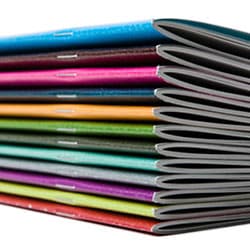
Saddle stitched booklets open flat and are easy to handle
What is Saddle Stitch Binding?
Saddle stitching is the binding method used for most magazines, brochures, and thin booklets. Printed sheets are folded in half, nested inside each other, and then stapled through the spine fold with wire staples (typically two).
The name comes from the traditional binding process where folded sheets were draped over a saddle-shaped support before stitching. Today, saddle stitching is fast, automated, and highly cost-effective.
Key benefit: Saddle stitching is the most economical binding method for booklets and thin publications, with fast turnaround and professional results.
How Saddle Stitching Works
- 1 Printing: Pages are printed on large sheets, typically with multiple pages per sheet
- 2 Folding: Sheets are folded in half to create sections
- 3 Collating: Folded sections are nested inside each other in the correct order
- 4 Stitching: Wire staples are driven through the spine fold to bind all pages together
- 5 Trimming: The three open edges are trimmed for a clean finish
Page count note: Saddle stitched page counts must be in multiples of 4 (4, 8, 12, 16, 20... etc.) because sheets fold in half with at least 4 pages per sheet.
Why Choose Saddle Stitch Binding?
Most Affordable
Saddle stitching is the lowest-cost binding method, making it ideal for high-volume marketing materials and regular publications.
Fast Turnaround
The simple process means quick production times. Rush orders are often possible for time-sensitive projects.
Opens Flat
Saddle stitched booklets open almost completely flat, making content easy to read and view across spreads.
Mailing Friendly
Thin, lightweight booklets are easy and economical to mail, with no rigid spine to damage in transit.
Page Count Guidelines
Recommended
- • 8-64 pages: Ideal range for saddle stitching
- • Self-cover (cover same paper as interior) or plus-cover options
- • Clean lay-flat capability throughout
Possible but Consider Alternatives
- • 68-96 pages: May require additional staples
- • Pages may not lie as flat
- • Consider perfect binding for 96+ pages
Remember: Page counts must be multiples of 4. The cover counts as 4 pages (front cover, inside front, inside back, back cover).
Cover Options
Self-Cover
Cover uses the same paper stock as the interior pages. The most economical option, suitable for internal documents and newsletters.
Example: 130gsm silk throughout
Plus-Cover
Cover uses heavier card stock than the interior. Adds durability and a more premium feel. Standard for magazines and catalogues.
Example: 300gsm cover + 130gsm interior
Covers can be finished with matt or gloss lamination for extra durability and visual impact. Learn about lamination options →
Saddle Stitch Binding is Ideal For
Publication Types:
- • Magazines and journals
- • Product brochures and catalogues
- • Event programmes
- • Company newsletters
- • Annual reports (thin)
- • Instruction booklets
- • Comics and zines
- • Children's activity books
Best When:
- • Budget is a priority
- • Publication is 8-64 pages
- • Fast turnaround needed
- • Mailing or distribution required
- • Regular, repeated publications
- • High quantities needed
Considerations
- No printable spine – Saddle stitched booklets have a folded spine, not a flat one, so spine text isn't possible
- Page creep – Inner pages extend slightly beyond outer pages after trimming; your printer will account for this
- Limited page count – Beyond ~96 pages, consider perfect binding for better results
- Less durable – Staples can eventually work loose with heavy use; for durability, consider other binding methods
Explore Other Binding Options
Ready to print your book?
Get competitive quotes for any book type - from 1 copy to thousands. Professional quality, worldwide delivery.