
PUR Binding vs Perfect Binding: Which Is Right for Your Book?
Both methods produce professional softback books with clean, square spines. The difference is the glue, and it matters more than you might think.
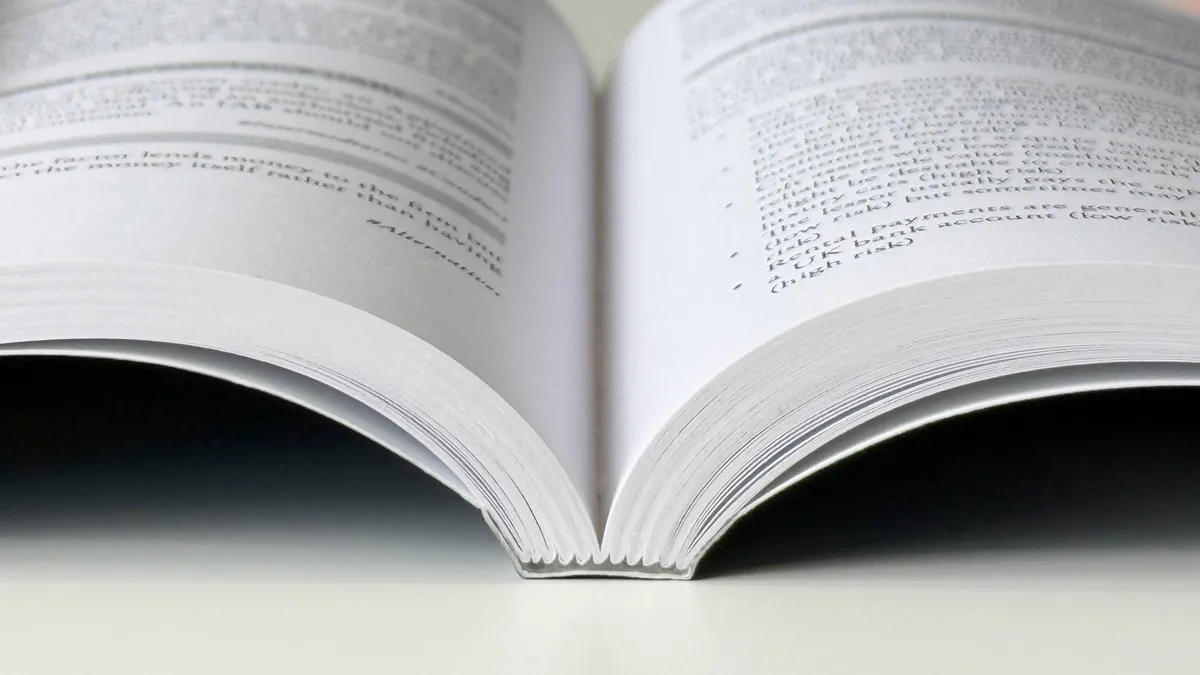
If you're printing a softback book, you've almost certainly come across the terms perfect binding and PUR binding. At first glance they look identical. Both produce a square-spined paperback with a wraparound cover. So what's the difference, and why does it matter?
It comes down to the adhesive. Traditional perfect binding uses a hot-melt glue called EVA (ethylene vinyl acetate). PUR binding uses a polyurethane reactive adhesive instead. That single change affects how strong the bind is, how long the book lasts, and which papers you can use.
Standard perfect binding (EVA glue) is perfectly adequate for books with a normal lifespan, such as a novel you read once or twice, or a catalogue that's replaced seasonally. But for books that get opened and closed hundreds of times (textbooks, workbooks, cookbooks, training manuals) PUR is the better choice.
How Perfect Binding Works
Perfect binding has been the go-to method for paperback books since the 1960s. The process is straightforward: the spine edge of the book block is roughened, hot EVA glue is applied, and the cover is wrapped around while the adhesive is still molten. As the glue cools, it solidifies and holds everything together.
EVA is a thermoplastic. It melts when heated and sets when cooled, with no chemical change taking place. This means it can be reheated and reused in production, which keeps waste low and cost down.
How PUR Binding Works
PUR binding follows the same basic process: roughened spine, adhesive applied, cover wrapped on. The difference is what happens after. PUR adhesive doesn't just cool and set; it undergoes a chemical reaction. Moisture in the air and in the paper triggers the polyurethane to cross-link, forming molecular bonds that are far stronger than a simple thermoplastic bond.
This reaction takes several hours to complete, but once cured, PUR adhesive cannot be remelted or undone. That permanence is exactly what makes it so strong.
Strength and Durability
This is where PUR really separates itself. A PUR bind is roughly 40–60% stronger than an equivalent EVA bind. Pages are far less likely to pull out, even with heavy, repeated use.
EVA binds are perfectly adequate for books with a normal lifespan, such as a novel you read once or twice, or a catalogue that's replaced seasonally. But for books that get opened and closed hundreds of times (textbooks, workbooks, cookbooks, training manuals) PUR is the better choice.
Flexibility and Lay-flat
PUR adhesive is applied in a thinner layer than EVA, which gives the finished book a more flexible spine. In practice, this means PUR-bound books open wider and lie flatter without cracking the spine or loosening pages.
If your book has content that runs across the gutter (the centre fold between two facing pages), or if readers need to write in it while it's open, PUR's flexibility is a genuine advantage.
Temperature Resistance
Because EVA is a thermoplastic, it can soften again in high temperatures. A book stored in a warm warehouse, a hot car, or shipped through tropical climates can, in extreme cases, have pages loosen as the glue softens. In cold conditions, EVA can become brittle and crack.
PUR doesn't have this problem. Once the chemical cure is complete, it's stable across a wide temperature range. For books that will be shipped internationally or stored in variable conditions, this resilience matters.
Paper Compatibility
This is one of PUR's biggest practical advantages. EVA glue bonds well to uncoated papers but can struggle with coated stocks, heavily inked pages, UV-varnished surfaces, and heavier weight papers. If the adhesive can't grip the surface properly, pages can come loose over time.
PUR bonds effectively to almost any substrate, including coated and uncoated papers, recycled stock, varnished sheets, and laminated surfaces. If your book uses art paper, photographic stock, or a mix of different paper types, PUR gives you confidence the bind will hold.
Side-by-Side Comparison
| Perfect Binding (EVA) | PUR Binding | |
|---|---|---|
| Adhesive type | Ethylene vinyl acetate (hot-melt) | Polyurethane reactive (chemical cure) |
| Bond strength | Good | 40–60% stronger than EVA |
| Flexibility | Can become brittle over time | Stays flexible; better lay-flat |
| Heat resistance | Can soften in high temperatures | Stable across temperature extremes |
| Paper types | Best with uncoated papers | Works with coated, uncoated, recycled, laminated |
| Cost | Lower | Slightly higher |
| Best for | Novels, catalogues, short-lifespan publications | Textbooks, manuals, cookbooks, photo books, coated-paper projects |
When to Choose Perfect Binding
Perfect binding with EVA glue is a proven, cost-effective option. It's the right choice when:
- Your book uses standard uncoated paper
- The book won't be subjected to heavy, repeated use
- Budget is a primary concern
- You're printing fiction, poetry, catalogues, or seasonal publications
When to Choose PUR Binding
PUR is the better option when durability, flexibility, or paper compatibility are important:
- Your book will be used frequently (workbooks, textbooks, training manuals, cookbooks)
- You're printing on coated, glossy, or heavyweight paper
- The book needs to open wide and lie flat
- Books will be shipped internationally or stored in variable conditions
- Inner pages have heavy ink coverage or cross-gutter designs
What About Appearance?
From the outside, the two methods look identical. Both produce a square spine with a wraparound cover. Your readers won't see any visual difference. The distinction is entirely in how long the book holds together and how it performs in use.
Our Recommendation
For most softback books printed on standard uncoated paper, EVA perfect binding does the job well and keeps costs down. But if your project involves coated papers, heavy use, or a book that needs to lay flat better and last longer, PUR is worth the modest extra cost. We're happy to advise on which is best for your specific project. Just get in touch for a quote and we'll recommend the right binding for your book.
Related
- Perfect binding: our full guide to traditional paperback binding
- PUR binding: more detail on PUR adhesive and when to use it
- Book printing options explained: an overview of all our binding methods